Wednesday, 4 September 2019

C'mon, Invite Little Wash Your Hands!

Image result for anak cuci tangan
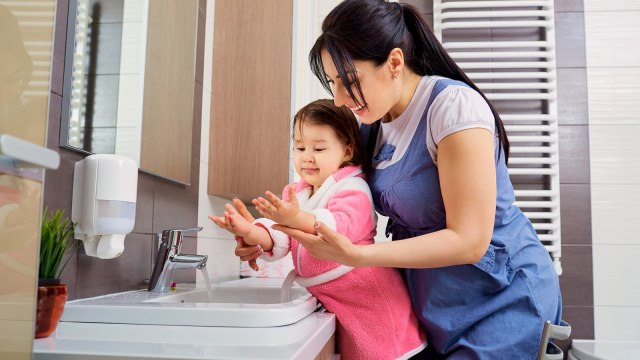
C'mon, Invite Little Wash Your Hands! - Healthy Friend, do you know  why children get sick so easily?  Small children, especially those just entering a new environment, are usually easily infected with germs. As a result they become easily infected with various diseases such as diarrhea, intestinal worms, flu, hepatitis A and so on.

Outside activities that many children do, like playing ball, playing with land or interacting with friends, can be one of the causes. Especially if your child doesn't like to wash your hands. Apparently, although trivial this can affect the health of your child. Want to know what the effects are? Let's check it out!

When does your child have to wash his hands?
Approximately, when is the right time for your child to wash their hands? Now, here are some things that you notice:

  • Before and after meals
  • After playing (either outdoors or indoors)
  • Before and after urination
  • After coughing, sneezing or blowing your nose
  • After feeding and touching animals
  • After touching animal dung


Mistakes made when washing hands

1. Wash your hands without soap
You know what, it turns out that water can only kill up to 10% of germs  ! If you use soap, 80% of germs can die, because in the soap there are alkaline substances that can kill germ cells. When compared, the use of liquid soap is better than bar soap, because germs are easier to hide in soap bars that have been used.

2. Just wash your palm only
Don't just wash the palms. Because it turns out that germs also like to hide between nails and fingers, you know! So, make sure your baby wash your hands thoroughly.

3. Don't dry your hands afterwards
Wash your hands the most correct way, it will be in vain if afterwards the hands are not dried! Remember, germs like to be quiet and thrive in a humid place, so always remind your child to dry his hands after washing his hands.

It is best to dry your hands using a clean towel or toilet paper, instead of using a dryer. Why? Because not all surfaces are completely dry, so make sure your baby's hands are dry, after washing their hands.


  • Wash your hands too fast

According to a study from Michigan State University,  that about 95% of people rinse their hands in a short time, without ensuring cleanliness. If it's like that, the hand might still store bad germs, like viruses or bacteria. Ideally, you wash your hands for 20 seconds, yes!

Come on, wash your hands properly!


  1. Wet both hands with clean running water
  2. Pour enough soap
  3. Rub both hands. Make sure to rub between fingers, the backs of your hands, and under your nails.
  4. Rinse hands thoroughly with running water.
  5. Dry both hands with a clean towel (or toilet paper or air-cooled) until the hands are not damp
  6. If possible, turn off the tap using the elbows or use a tissue so that the clean hands do not contact the tap again.

Let's start washing hands from now! Washing hands is part of PGS, you know! By doing this small movement, will minimize and prevent evil germs from infecting the baby's body!
Share:

Come on, Bring Your Little Fish Consumption!

Image result for anak makan ikan
Come on, Bring Your Little Fish Consumption! - Healthy friends, whether we realize it or not, there are still a lot of kids, who don't like to eat fish. Though fish is one source of protein with essential amino acids that are good for the body and easy to digest.

Especially for children who are still in its infancy, really need a high protein intake. Well, because it's still in the atmosphere of celebrating World Children's Day and National Fish Day, let's do this so your little one likes to consume this protein source! Let's check it out!

Your baby's protein needs
Do you know? Your child needs a lot of protein intake, in his infancy. According to Jania in her writing, children aged 1-3 years are encouraged to consume as much as 13 grams of protein, children aged 4-8 years are recommended as much as 19 grams, and children aged 9-13 years are recommended as much as 34 grams.

From 3 ounces of fish, you've got 20 grams of protein. Besides being high in protein (amino acids), these foods also contain lower fats and calories, omega 3 fatty acids, and are rich in minerals (iron, zinc, and calcium).

Recommend early on
Yep, eating behavior must be regulated as early as possible. You can invite and familiarize your child eating healthy foods, such as familiarizing the consumption of home food with fish or seafood side dishes or adding portions of vegetables and fruit by reducing unhealthy foods and snacks.

But, what if the little one still doesn't like it? You can't give up, introduce your child to processed products or mix fish with his favorite foods, such as fish balls, nuggets or mixed with sauce spagetti .

Recommend the benefits
You can tell the benefits of fish to your child, with language that is easy to understand. For example, one of the benefits is, the content of omega-3 fatty acids can increase endurance. You can tell your child, by eating fish, will make them strong like a super hero.

Or you can also say, if you want to be smart like her idol, your child must eat this food, because according to  Torey Armul in the Academy of Nutrition and Dietetics ,  the omega 3 content is good for brain development.

Create processed products
Usually, the cause of your child does not like the consumption of these foods is the fishy smell and thorns that are still present when serving food. This makes your child so lazy to consume them. Well, you have to change the way it is processed, like adding lemon juice or seasoning before it is processed.

If to avoid thorns, you can teach him how to consume the right one, or separate the thorns before consumption. In order not to get bored, you can create menus such as satay, steak, nuggets, meatballs, or patty burger. Make fish not only staple food, but also create healthy snacks.

Well, now you know, how do you make your child like to eat fish? Oh yes, do not forget to invite your child in the process of preparing food, so they are increasingly interested in consuming it.

Try to make your child not consume fried foods too often, O Healthy Friend! Because it will increase the risk of obesity. It's better if the fish is processed by baking or as a soup. Don't forget to share your experience below, please!
Share:

C'mon, Do These 4 Things So That Your Little Used To Eat Healthy!

Image result for anak makan
C'mon, Do These 4 Things So That Your Little Used To Eat Healthy! - Healthy Friend, have you found it difficult to get your child to eat healthy food? Yep, sometimes when asking her to eat healthy food, then what comes to her mind is food that has no taste and too much vegetables in it.

In fact, in the growth and development, your child needs a lot of intake of nutrients from various kinds of food, you know! Then, what should I do, how to get a healthy diet for your child? Come, see the explanation here!

Children's nutritional intake needs

Before discussing healthy eating habits for your child, you need to know what nutritional intake your child needs. Based on the Balanced Nutrition Guidelines (PGS) , nutritional intake that is important for the growth and development of children aged 6-10 years are:

Protein: plays a role in supporting the growth and development of the body and optimal metabolic function.
Enough energy: it is important to support physical and brain activity during their growth and learning
Vitamins and minerals: support the functioning of organs and body systems to function optimally.
What do you do, how to adopt a healthy diet?
Here are some easy things we can teach children to make children accustomed to healthy eating:

1. Introduce various types of food
Based on publications from  The Royal Children's Hospital Melbuorne,   more than 50% of children in their studies, can not choose or distinguish between healthy and unhealthy foods. This makes the role of parents or closest people is very important in introducing this type of food to your child.

You can start introducing your child, by taking him to shop, to introduce types of fruits, vegetables and other food ingredients. Also tell the benefits of eating these foods and taste good when eaten. Do not forget, serve a variety of healthy food menus, so that your child is getting to know the type and taste of healthy food.

2. Eat regularly
Learning and playing activities are high, making your child less likely to eat. This is also mentioned in the Virginia State University publication , which states the same thing and is one of the reasons your child has the risk of malnutrition.

For that, you can get used to your child eating regularly, for example by getting used to 3 main meals and 2-3 heavy snacks. If done regularly, this can provide optimal nutrition for your child.

3. Familiarize breakfast
Breakfast is important, for growth and development! In PGS , breakfast is beneficial for increasing concentration while studying, preventing little kids from hawking indiscriminately and providing adequate energy, vitamins and minerals for the day.

4. Give vegetables and fruit as a snack
Snacks certainly can't be released from your child's eating habits. Usually the snack is identical to foods high in sugar, fat, salt, or packaged foods that tend to contain preservatives.

You have to start reducing this, because this can trigger the risk of obesity and other infectious diseases. One way, you can replace the snacks with vegetables or fruits in the form of juice or jam added to the biscuits and bread.

Well, that's 4 easy things that Healthy Friends can apply to your child. Come on, start to apply this, so that a healthy diet for your child, can be created early on!
Share:

Myths and Facts of Coconut Water for Pregnant Women

Image result for kelapa
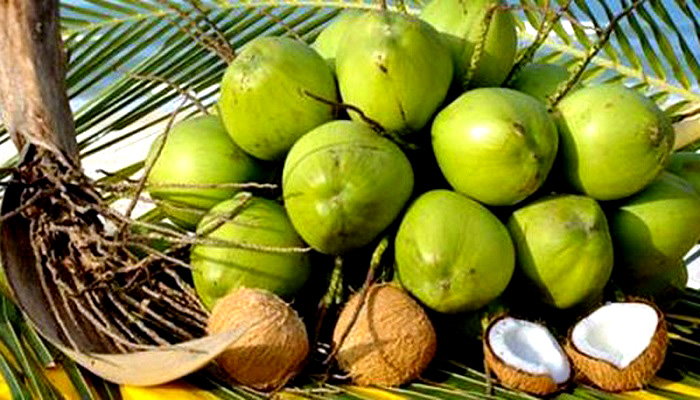
Myths and Facts of Coconut Water for Pregnant Women - Healthy Friend, have you heard the myth that pregnant women consume pregnant water, can make a baby cleaner and whiter? Yep, there are still many people who believe in this. But isn't it true, this myth? Besides that, what the heck is the fact that coconut water is consumed by pregnant women? Come, see the explanation here!

Facts on the consumption of coconut water in pregnant women
Basically, pregnant women are advised to drink coconut water, so that their fluid needs during pregnancy are met. In addition, coconut water also contains macro nutrients (carbohydrates, fats, and proteins) and micro nutrients (vitamins and minerals) which are good for pregnant women.

Coconut water is also referred to as an isotonic drink, because it is rich in mineral content, such as potassium (17%), magnesium (15%), vitamin C (10%), low sodium and high in fiber. Almost 94% of the composition of coconut water, is water with a low calorie content.

Pregnant women are advised to routinely consume coconut water, to  help maintain blood volume, prevent dehydration due to nausea and vomiting in early pregnancy. In addition, the content of vitamin C in coconut water can help maintain health on the skin, you know!

The myth of coconut water
As you know, that babies in the mother's womb, will get food or nutrients from what is eaten by the mother. Therefore, coconut water is believed by some people to help baby's skin become cleaner and whiter.

But, basically what determines skin color is melamine or skin pigment. Melamine produced, will be influenced by a combination of parental genes and sun exposure.

In addition, according to one of the articles, according to one health expert, the fetus said that the older the baby, the cleaner it will be. This is because the fat covering the fetus decreases.

If born with an adequate age, ie above 36 weeks, the fetus will be clean. However, if it is less months old, there will be residual fernic fat on the baby's skin. In the womb, this fat is used to protect the fetus.

Well, Healthy Friend, that is a myth and the fact that coconut water is consumed by pregnant women. So, coconut water is very safe for consumption by pregnant women because of the many benefits provided. Come on, stay healthy during pregnancy!
Share:

6 Types of Cancer that Can Attack Your Little One

Image result for penderita kanker
6 Types of Cancer that Can Attack Your Little One - Healthy friend, do you know? It turns out that cancer does not only attack adults, you know, but also your child. The difference in cancer that attacks the child is iuni disease can not be prevented like adults.

Oh yes, besides that the type of cancer that infects your child is divided into two namely, blood cancer (leukemia ) and solid tumors. There are 6 cancers that you can learn, to recognize the symptoms. So, let's check it out!

1. Leukemia
Leukemia is the number 1 cancer that often attacks the child. This disease is caused by excessive production of white blood cells. In Indonesia, 46 cases of children have leukemia.

In addition to affecting the blood, this disease can also affect the formation of body tissues, such as the bone marrow and lymphatic system (tissue that helps clear toxins) .  Symptoms of your child affected by this disease are, often fever, pale face, and frequent bleeding on the skin, gums, or nose.

2. Lymph nodes
Lymph nodes (lymphoma), is a type of blood cancer that attacks the lymphatic system . This disease is caused by white blood cells that do not function properly, which is 'dividing' faster than usual.

Oh yes, the characteristic if your child has this disease is that the neck gets bigger in a short amount of time, so that you won't feel pain if the lump is held or pressed.

3. Rhabdomyosarcoma
One other cancer that can attack your child is Rhabdomyosarcoma. This disease is caused by primitive muscle cells that attack muscle parts. This disease can also be caused by radiation, smoking, viruses, and genetic factors.

4. Eye cancer
Eye cancer (retinoblastoma) is a disease that attacks the eye area. There are 13 cases in Indonesia that experience this disease. The initial symptoms of a person experiencing this disease are, eyes become red, vision problems and squint.

5. Brain Cancer
Another type of cancer is brain cancer. Even though a bump in the brain cannot be seen or touched, but you should suspect it, you know! Someone who experiences this disease, will have symptoms such as dizziness, balance disorders, spraying vomiting and paralysis.

6. Neuroblasma
Neuroblasma is one of the solid tumors originating from the suprarenal gland (kidneys of the kidneys). These tumors have specific characteristics, such as physically visible bulge and when pressed will feel a lump. This disease, usually occurs more often in infants.

Well Healthy Friends, that's six diseases that are at risk of attacking your child. So,  let's prevent cancer early! Pay attention to the symptoms that exist in each of these diseases, so that healing can be done immediately. Do not forget to spread it to the people closest to you, yes!
Share:

Blog Archive

Definition List

Unordered List

Support